


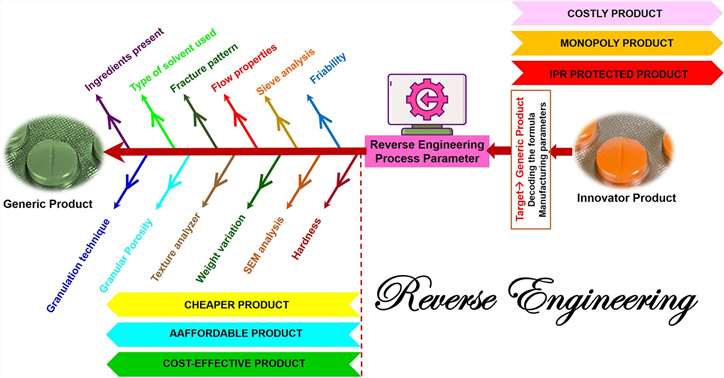
Deformulation services are a procedure of testing the formula of a known product to figure out how its constituents relate to each other. This generally includes detailed analyses of the product’s chemical, physical, and manufacturing properties. From this insight, companies can identify ingredients and look for alternatives or improvements to the formula that create product innovation.
Deformulation services have been a necessity in different industries. For instance, chemicals, cosmetics, personal care, food processing, medical instruments, building, electronics, and packaging industries all offer services in deformulation, which enables them to get intimate knowledge about the formulation of the products. The data helps businesses innovate new products or optimize existing ones and be more competitive. Besides, with deformulation, enterprises can discover new markets or enhance existing products for the needs of consumers.
Deformulation services are used by companies not only to improve the products but also for new product development. By comparing the products of rivals or the hot product in the market, companies can get some inspiration to come up with more competitive and attractive products. Deformulation services are therefore an important part of product innovation, giving businesses long-term competitive advantage and market expansion potential.
Reverse Engineering for Competitive Analysis
Reverse engineering is a tool that can provide businesses with formula information through competitors’s products, thus recognizing what works and what doesn’t. For instance, by breaking down and testing a competitor’s product, a firm can find out what the ingredients in the formulation are and how they work to see where you can innovate or differentiate. This isn’t only about chemical components but also product designs and operation.
Specific Case
In one case, a company reverse engineered a formula for a popular drink on the market and found the ingredients contained an essential spice and a preservative. On this data, the company created an equivalent-tasting product elsewhere cheaper and got a market lead.
Troubleshooting and Quality Improvement
Reverse engineering laboratories can diagnose what caused the product to fail or cause side effects. Reverse engineering, for instance, can help the pharmaceutical industry to identify instability issues with actives and optimize formulations to optimize the product. Analyzing the composition of the product is a way for the company to determine if reactive impurities or degradation products are present and to prevent it.
You can even reverse engineer to optimize a product that already exists. For instance, if a company inspects products already on the market, it can determine formula faults and optimize products by altering ratios of ingredients or adding new ingredients.
Ingredient Substitution and Cost Reduction
Another use case for reverse engineering is substitute ingredient discovery, which can replace rare or specialized raw materials without impairing product functionality. Reverse engineering can, for instance, be used in the pharmaceutical sector to search for cheaper substitute raw materials to reduce manufacturing costs. We can take this model both in pharmaceuticals and in the food, beverage, and other consumer goods industries.
If substituted by raw materials, companies can substantially reduce prices and raise the quality of their products. One cosmetics manufacturer, for instance, applied reverse engineering to identify a generic ingredient that worked very well and made it cheaper to produce and more competitive.
Development of New Products and Variants
Reverse engineering services can lead to new ideas for new products or lines. If companies know the ingredients inside out, they can create new versions of their products for certain market verticals or consumer needs. For instance, based on competitors’ formulas, one company could develop a health drink that was different enough in flavor and satiated consumer demands for a healthier drink.
Reverse engineering is even useful to the businesses for creating new products. Reverse engineering of a car manufacturer, for instance, looked at the models of cars already available on the market and, using this data, came up with a similar but more sustainable car model.
Reverse engineering is a fundamental innovation process in products. From competitor research to quality and cost optimization to new product development, it helps businesses in every step. Reverse engineering helps companies not only to know what competitors are producing but also to optimize their formulations and keep ahead of the competition.
Expertise and Experience
A lab that has expert chemists, analytical scientists, and formulationists on board is key. These specialists need to have the years of experience and track record needed to be successful in deformulation experiments. For example, some labs can be well-experienced with the complex formulation and report detailed analyses. Another thing that a lab should know about is industries and product lines that they can offer custom solutions for.
Analytical Capabilities and Equipment
Deformulation analysis requires the best analytical tools and techniques. The laboratory must also have instruments like mass spectrometry, nuclear magnetic resonance (NMR) spectroscopy, chromatography, etc., for the correct identification and measurement of elements. An experienced laboratory will manage to take complex formulas with ease and deliver results. Further, it is important to see if the lab provides constant technical assistance and services.
Confidentiality and Data Security
Ensure the lab you select has strong confidentiality procedures and safe data storage for product information. Data breaches can have disastrous legal and commercial implications, so choosing a lab that has the ability to protect client privacy is extremely essential. This is where the trust is between the client and the lab, and that trust has to be able to exist and be sustained by the lab.
Communication and Collaboration
The process of deformulation must be open and honest. It must have a regular report to clients on progress and make things crystal clear. This collaboration allows the lab to better comprehend the client and address any issues on time so client goals are met.
Select the appropriate deformulation lab based on its expertise, analytical capabilities, confidentiality, communication, and collaboration skills. All of these factors are what decide the quality of services and the validity of analytical work that the lab can provide.
A. Sample Collection and Preparation
Analyzing entails having representative and sufficient samples. The representativeness of the sample directly impacts the quality and consistency of later analyses. And if the sample is not representative of the product, the analysis will come out biased and incorrect. Hence, it is essential that the sample be as representative of the product’s chemical content as possible.
Sample preparation consists of some essential steps like homogenization, extraction, and component separation. Homogenization is done to ensure that the sample has the same distribution of components before analysis so error from sample inhomogeneity is minimized. Typically extraction takes place by the solution being dissolved in the sample using methanol or chloroform as a solvent.
B. Analytical Techniques and Ingredient Identification
Ingredients are typically characterized through a range of different analytical methods in deformulation labs. They are spectroscopic techniques (such as nuclear magnetic resonance (NMR), infrared spectroscopy (IR) and ultraviolet visible spectroscopy (UV/Vis)), chromatographic techniques (GC, LC, and electrochemical chromatography (EC)), and elemental analysis. Each technique has its pros and cons, and the correct analysis is chosen according to the chemical composition of the sample and the analytical substance.
The information gathered by such methods has to be processed and interpreted to understand the product composition. For instance, NMR tells you about molecular structure, and GC and LC give you separation and quantitative analysis.
The preprocessing steps for the data analysis are usually noise removal and normalization, peak detection, feature extraction, etc.
C. Formulation Reconstruction and Optimization
Once known elements and ratios are calculated, the underlying formulation can be remade or a better version constructed. This is repeated testing and optimizing to get the rebuilt product to produce the right performance and features. For instance, in the food industry, it can increase or decrease the ratio of ingredients so that the food tastes better or is healthier.
To get the best out of the product, countless tests and tweaks happen. That means tuning the ratios of all ingredients in the formulation and confirming their effects experimentally. With this method, the formulation can be fine-tuned over time to make the finished product comply with the quality requirements.
D. Reporting and Recommendations
This will be a full report that the lab will create about the outcome of the deformulation study. The report usually has the ingredients and weights, how they might be made, and any suggestions for improvement or innovations.
This should also be explicit in its report recommendations, which can be implemented to help the client take action as per these recommendations. For instance, if an ingredient plays a critical role in product performance, then the report should include clear recommendations about how to increase the percentage of the ingredient. Furthermore, the report should contain future areas of improvement like new formulations or manufacturing changes.
Improvements in Metal Forming Technology in the Automotive Industry
Optimizing metal forming technology in automotive manufacturing is a common example of deformulation-based innovation. By redesigning the shape of tool molds, for example, firms were able to produce more accurate and complex goods, including load-bearing assemblies in airplane engines and turbochargers. The components need to be of very high reliability and robustness, and the tool molds must be very demanding. As a result of deformation, engineers can control the material and processes more precisely to reduce defects and improve product quality. While this requires a lot of experience and expertise, model-based process design techniques can also save money and time.
Packaging Innovation in the Food Industry
The deployment of active packaging in food is a good case study in deformulation-based innovation. Some coffee producers, for instance, have implemented active packaging that does improve the product shelf life and increases the product quality. The technology has affected production and brought benefits via indirect means like waste reduction and market efficiency. This innovation might take a long time to build up, but its long-term economic payoff is obvious.
The Application of 3D Printing Technology in the Medical Field
Even 3D printing for medicine has shown the potential of deformulation-driven invention. Doctors could, for example, fabricate detailed surgical models and orthoses using 3D printing. This technology is not only helping in surgery success but also expediting patients recovery time and costs. Furthermore, 3D printing has allowed small startups to produce cutting edge medical equipment and thus is propelling the entire sector forward.
These are scenarios of companies improving product performance, market share, or cost by deformulation-driven innovation in the face of problems. Innovation in deformulation needs not only technical mastery and experience but also flexibility to adapt to the market. In these successful examples, we can observe how widespread and potentially endless the possibilities of deformulation-based innovation are.
Among the problems that often arise during deformulation are complex formulas, many ingredients, technology-specific capabilities and incomplete manufacturing process data. It’s hard and time-consuming to decouple and characterize parts of a product with these issues. For instance, some products have ambiguous matrices, which can make ingredient identification hard, and components once detected can only be quantified using expert knowledge and expensive instruments.
The following can be the ways of solving these problems:
Deformulation is one of those things that you need to do chemical analysis, physical analysis, and also know your manufacturer very well. For example, numerical simulation and physical modeling in metalworking tackle deformation problems that optimize material properties and production efficiency. It’s just as possible to apply this concept to deformulation elsewhere, where more than one method is deployed to overcome complexity.
With such practices, most difficulties with deformulation can be easily solved, and product research and development can be more effective and safe, and quality products can be delivered.
Deformulation and Reverse Engineering