


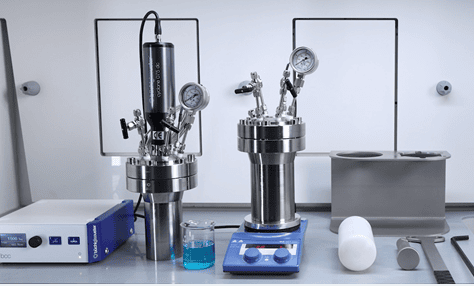
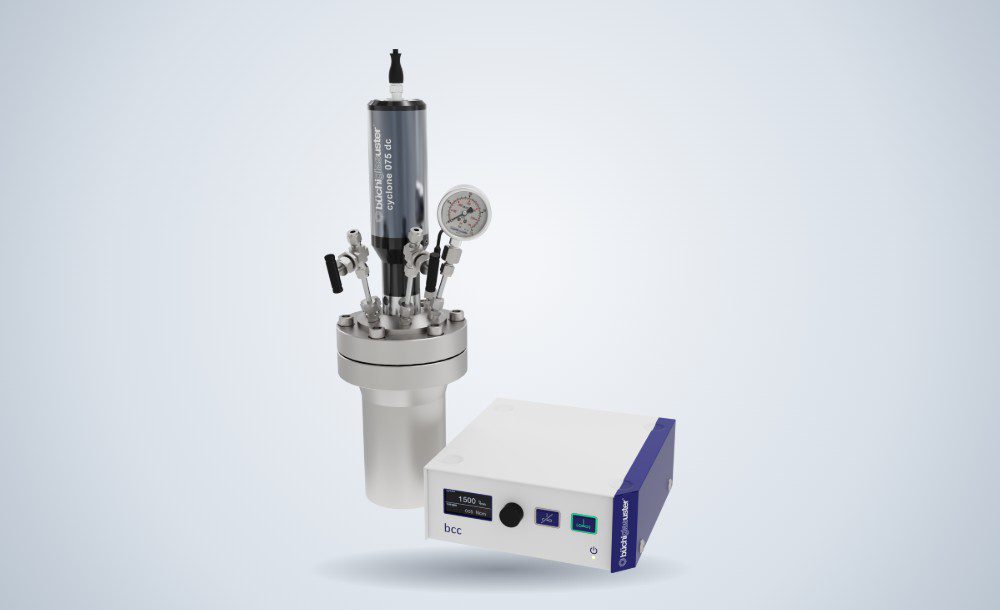
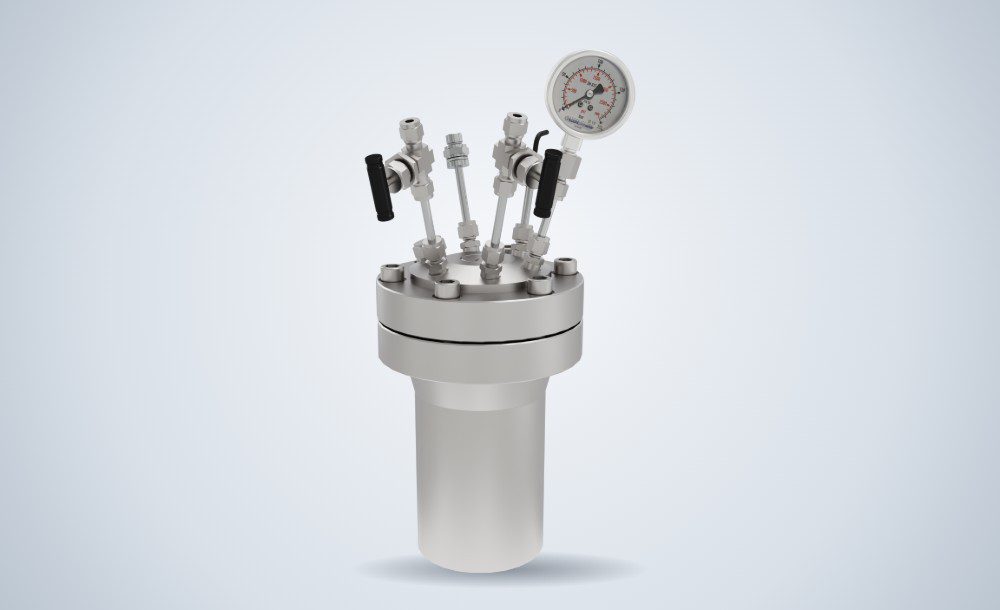
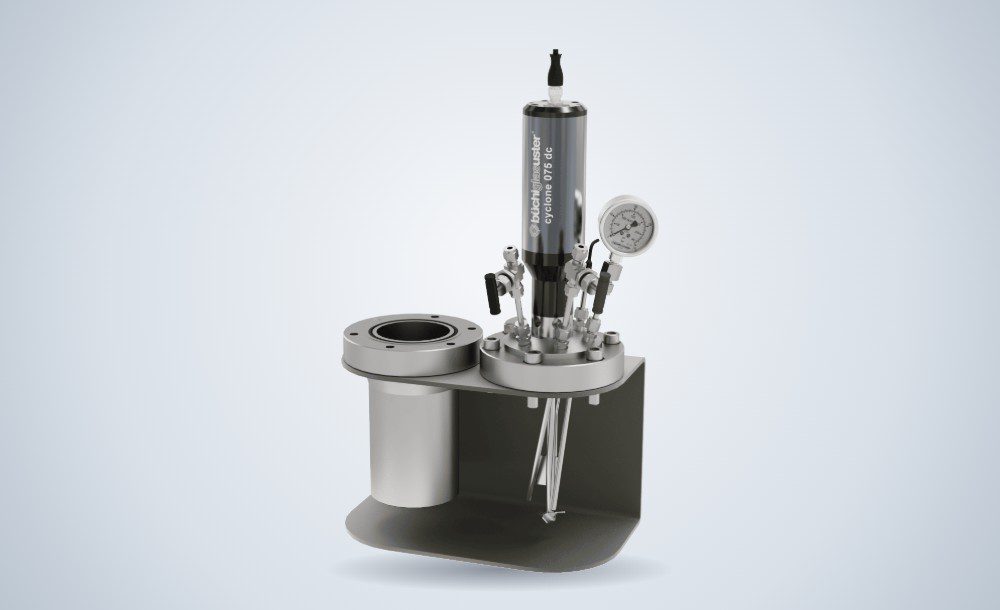
Büchi has developed the maxiclave: a new, compact laboratory pressure reactor for research and process development where high pressure and temperature play a major role. The reactor is suitable for applications up to 200 bar and 300 °C and offers flexible use thanks to interchangeable 0.5- and 1.0-litre reactor vessels.
The maxiclave is available in a non-agitated version and as the maxiclave drive with magnetic agitation via a Cyclone 075 DC drive. This allows the configuration to be tailored to the application and the desired process conditions.
The reactor is designed for research and development applications requiring controlled pressure and temperature conditions, such as:
Thanks to its combination of a compact laboratory-scale design and high pressure and temperature limits, the maxiclave is ideally suited to the precise investigation of process conditions before upscaling.
The reactor vessels are available in stainless steel and, optionally, in Hastelloy. PTFE inserts are available for aggressive or corrosive media. An ergonomic stand makes it easier to handle the reactor vessel and the lid plate.
In the non-stirred version, the medium can be mixed using a magnetic stirrer. Heating can be achieved, for example, using a hotplate, a bath thermostat or electric heating jackets.
The most suitable reactor depends on the process conditions and the aim of the research. Pressure, temperature, material compatibility, mixing and the properties of the medium all combine to determine the required configuration.
As a partner of Büchi, Suurmond is happy to advise on the selection and configuration of reactor solutions for laboratory and process development. In addition to standard pressure reactors, Büchi also supplies solutions that can be further tailored to specific process requirements.
Would you like to know whether the maxiclave is suitable for your application, or are you looking for a reactor for research under high pressure and temperature? Please contact Suurmond to discuss your process and the required conditions.
Fancy a powerful pressure reactor on your lab bench too?