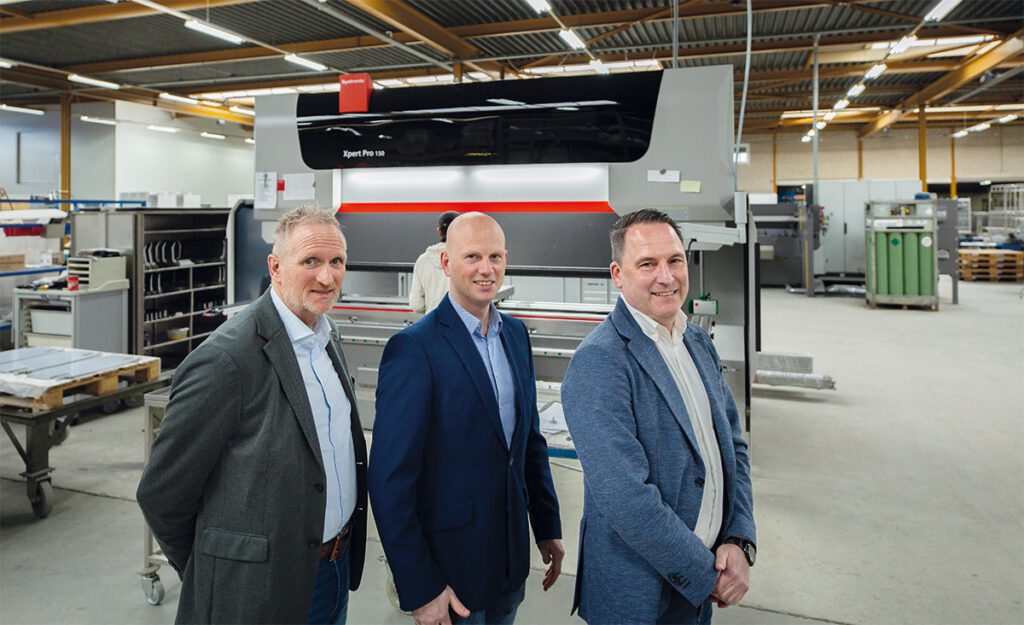
Arno Wouters (left), Commercial Director at Bronson Incubator Service, Rob Hoogenboom (middle), Technical Commercial Director at Bronson Climate, Pieter Snijders (right), Director of Snijders Labs | Photo: FOODnote
Climate and crop research requires plant growth chambers that allow plant researchers to simulate increasingly extreme growing conditions and push boundaries. Standard chambers, intended for routine research, fall short in this regard. This is the reason Bronson Climate and Snijders Labs are joining forces in production speed and R&D to provide researchers with a new generation of plant growth chambers: from professional entry-level models to advanced custom solutions.
Simulating more extreme growing conditions requires plant growth chambers that perform much better across the board—such as extremely high light intensities, temperatures, relative humidity, and CO₂ levels—than standard chambers, while ensuring environmental parameters remain manageable. A typical example of this is research at the interface of climate and plant science into the cultivation of new drought-resistant crops under the intense Spanish sun.
Given the growing demand for this type of advanced equipment, Bronson Climate and Snijders Labs are now entering into a collaboration to scale up the production of plant growth chambers in the mid- to high-end segment. Where production speed and R&D converge, delivery and innovation can be faster, both parties state. This is good news for plant scientists who want to be able to investigate the effects of climate change on plant growth under realistic and manageable conditions.
tk1 Climate research requires customization
Plant growth chambers based on decades-old standard technology often no longer suffice. Researchers are therefore seeking partners who collaborate on experimental setups and develop custom solutions. Here is why. This market is dominated by manufacturers who compete on price; the masses rule. Climate research is certainly important for these, but they will not readily switch to producing chambers with advanced specifications. For them, this is a niche that requires a lot of R&D, making it less interesting from a product technical perspective.
“The law of large numbers applies here,” states Pieter Snijders, director of Snijders Labs. “That is simply plug it in, plug & play. Fine for standard research, but due to climate change, the focus in research is shifting, and studies are no longer nearly as standardized.”
Arno Wouters, Commercial Director at Bronson Incubator Service, nods: “Such a standard cabinet is fine for growing three layers of Arabidopsis, the popular model plant ‘thale cress,’ but it cannot scale up to, for example, desert conditions with high light intensities, UV levels, and low humidity.” Rob Hoogenboom, Technical Commercial Director at Bronson Climate, gives a technical example. “Suppose you want to grow corn for those kinds of climates; then you go to 1000 micromol or 1500 micromol. Then suddenly, many suppliers drop out, because this is not possible with their cabinets. Let alone if you would like to go a step further.”
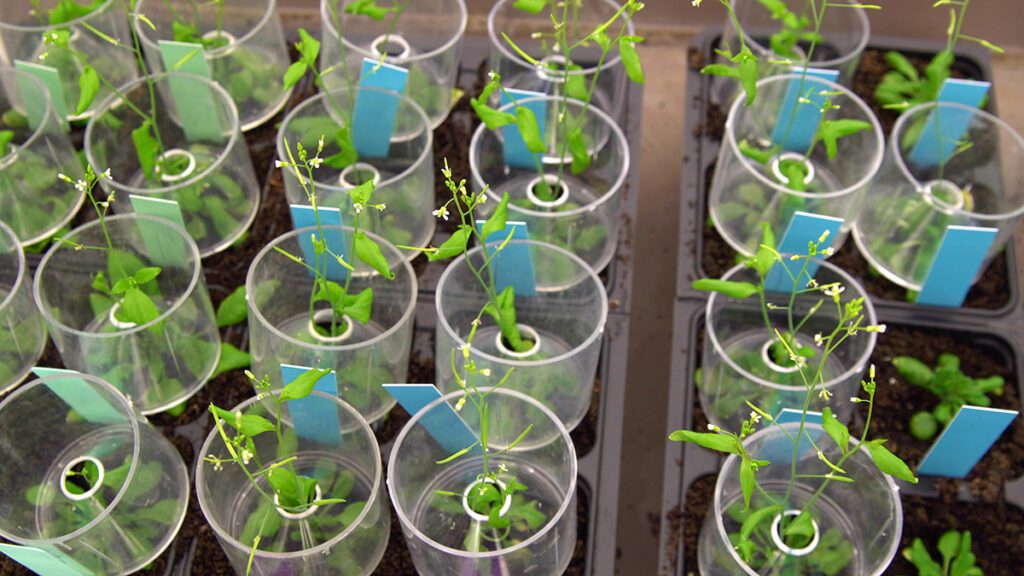
Arabidopsis | Photo: AdobeStock
tk2 Reproducing extreme growth conditions
Research into, for example, drought-resistant crops that produce in a warming climate requires cabinets that can representatively and reproducibly simulate more extreme climate conditions.
This means they must closely resemble real-life situations. “Our plant growth cabinets are more than just a stable environment; they offer a fully programmable growth scenario,” Hoogenboom chimes in. “With our control software, you translate research questions directly into a reproducible climate protocol, from simple day-night cycles to seasonal simulations with extremely high resolution. For longer experiments, you effortlessly convert this into a weekly program with 7×24 steps. This allows you to program complex, realistic day cycles with variations per day. Is that not refined enough yet? Then we take it a step further. Via TSV import or OPC communication, the cabinet can switch per minute. This allows you to load a complete season, from sunrise and sunset curves to weather and light variations, on a scale normally only seen in data platforms.”
“With our control software, you translate research questions directly into a reproducible climate protocol”
tk3 Groundbreaking plant studies
It is this type of technology that allows scientists in the field of climate and plant research to push their boundaries. This is not possible in cabinets intended to ‘grow begonias.’ These kinds of advanced studies require innovative equipment with all the bells and whistles. This includes the software.
Hoogenboom: “Let me put it this way: that new generation of researchers, in particular, expects more from a plant growth cabinet than a model with standard technology, which isn’t even that different from thirty years ago. I might be exaggerating a bit, but there really are manufacturers building just like they did in 1990.”
Snijders chimes in: “Rob is absolutely right. That young researcher expects modern software, with all the functionalities you know from your smartphone, to be able to generate nice graphs and isn’t waiting for a box that can only do one thing, namely, ‘turn on and off’ and immediately runs up against its limits.”
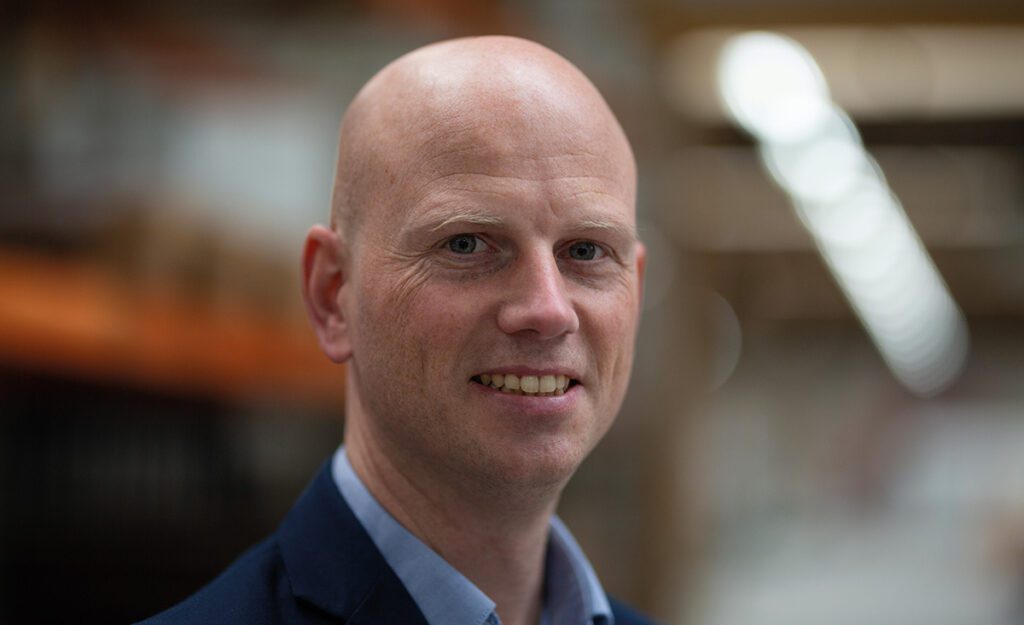
Rob Hoogenboom | Photo: FOODnote
“There really are manufacturers building just like they did in 1990”
In-house service department
Moreover, this new generation of researchers wants to spar with knowledge partners to collaborate on challenging climate issues. That requires a partner who thinks along regarding research setups, invests in R&D, and can think outside the standard solution. And not only that. The continuity of these kinds of long-term studies must also be guaranteed.
Snijders: “And what do you think of the service aspect? That has become a significant thing. On-site service, I mean. The situation there is often deplorable. Occasionally you are just better off buying a new one. I hear stories that they won’t send a technician, and you have to hoist the device onto a pallet yourself and send it off. Why? Because distributors often don’t have their own service department, they are dependent on another party.”
Snijders continues, “In that respect, buying cheap is expensive in the long run. If we receive a report of a malfunction or a problem, we simply send a technician over there. And then we try to repair it on-site. Much nicer for the customer too, I think.” Wouters nods: “It is the same with us; we find common ground in that as well. Moreover, the new high-end generation of plant growth cabinets is accessible to us via an online connection. This way, we can—naturally, with the user’s prior permission—log in remotely and quickly resolve nine out of ten malfunctions or support the user.”

Pieter Snijders | Photo: FOODnote
“You do not want a box that can only do one thing, namely turn on and off, and that immediately runs up against its limits”
tk4 Representative crop trials
In short, anyone wanting to make strides in climate research seeks a technical partner who embraces innovative approaches. “Only when you can take your plant growth chamber to 1,000 micromol or higher and can work with high temperatures during the day in combination with night frost simulation, high or low relative humidity, and control CO₂ can you professionally conduct your research into crop growth in, say, increasingly dry Southern Spain. You will see things you never saw before because you can work under much more extreme conditions,” Wouters notes.
“In doing so, we can reach the highest intensity measurable on Earth, not only in theory but also in practice. That is around 2,300 micromol. To give you an idea: that is a factor of 10 higher than a standard grow cabinet. Then you are truly in the top segment. If you want to investigate growing crops under the most extreme conditions, you need cabinets that can simulate that. You don’t achieve that by keeping your plants at 250 micromol for 10 times as long.” The latter is certainly not representative of field practice. “Extrapolating data because you are not simulating the right conditions is always a matter of waiting and seeing with plants. The reality is really different. Arabidopsis dies in a few minutes if you subject it to a Death Valley climate.”
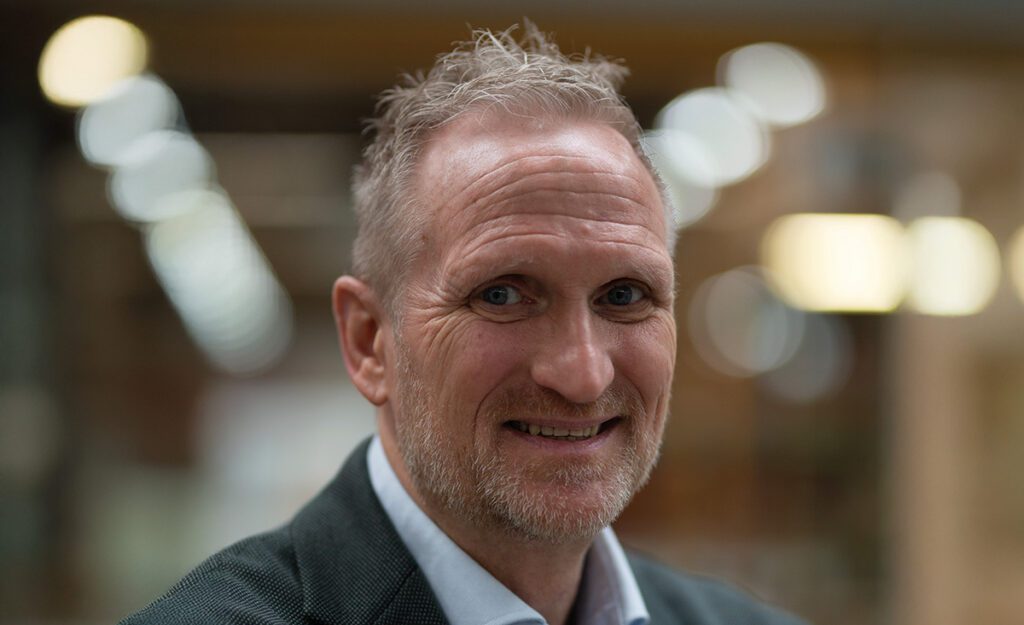
Arno Wouters | Photo: FOODnote
“In doing so, we can go to the highest intensity measurable on Earth, not only in theory but also in practice”
Arno Wouters
tk5 Synergy in plant growth chambers
Although Snijders Labs and Bronson Climate are both active in the market for plant growth chambers, this does not conflict. In fact, they argue, it is synergy because Snijders operates more in the mid-market segment and Bronson more in the top segment. “Collaboration is the modern way of operating flexibly,” responds Snijders. “Look at the automotive market. Who still does it alone? We at Snijders are stronger in larger volumes; Bronson is stronger in R&D. Together, we can serve the professional market from the mid-market to the top segment.” Snijders continues, “Of course, you invest more if you choose a chamber that performs twice as well as the average, but if you can actually conduct that research with it, become much more flexible in your research, and can use it for 8 to 10 years, then you can explain that perfectly well to the purchasing department.” Pauses briefly: “If you want to professionalize, are not involved in standard research, and want to move towards advanced simulations, then you come to us.”
“You want your research to be reproducible so that your plants in field trials don't die at the very firstnight frost”
tk6 From standard to tailor-made plant research
In this context, the parties explicitly wish to present themselves as knowledge partners. After all, a standard solution does not fit a complex research question. This is where a great deal of expertise and experience with advanced plant research comes into play.
What works and what doesn’t? Is customization required? And if so, to what extent? Does that fit within the budget? What will that investment yield? For Hoogenboom, the essence of climate research lies in sharing knowledge. This allows you to arrive at a suitable solution together with researchers. This can range from an almost standard solution to the ‘sky is the limit.’
“Not everyone needs a cabinet that performs real-time photosynthesis measurements, with all the analyses, the software, and everything included. With a day-night cycle, including night frost simulation. But we can do it. Just what is needed. From standard plus to tailor-made. Do you want your research to be reproducible so that your plants in field trials don’t die at the first sign of night frost? Do you want to introduce more heat and more light while still keeping your RH under control, which technically becomes the greatest challenge? You don’t want a dripping cabinet with mold growth, do you? You want to have the simulation your research requires under control, right? Then you have come to the right place. And that includes a degree of automation, which is becoming increasingly important. Through this collaboration, we can realize this more easily and with faster delivery times.”