



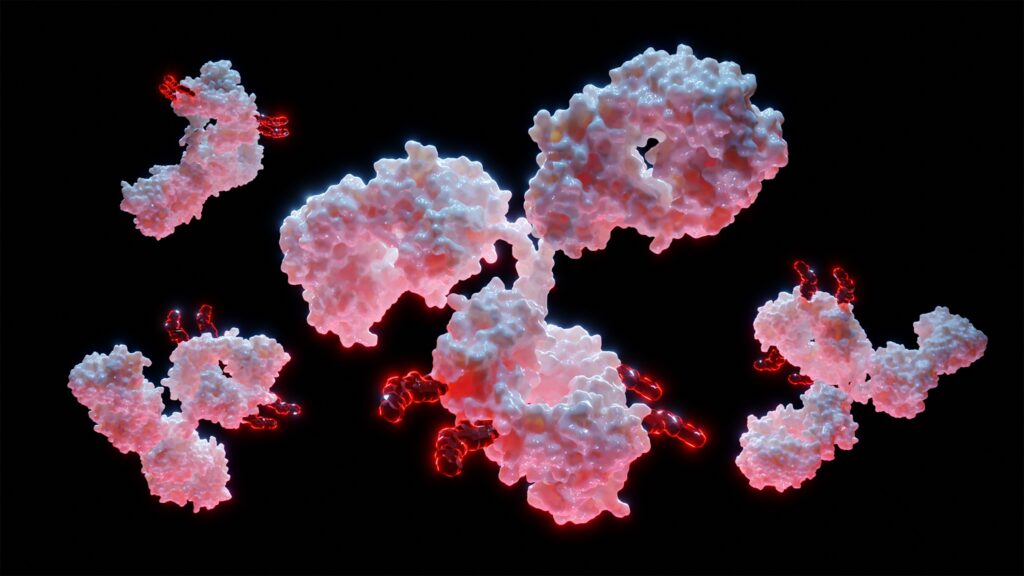
Recently, antibody-drug conjugates (ADCs) have gained significant traction in tumor and related disease treatment. By combining the high specificity of antibodies with functional payloads, ADCs offer an important pathway for precise delivery and targeted therapy. With the continuous accumulation of R&D experience, the ADC technology system is gradually evolving from early single-molecule designs to more complex and flexible conjugation strategies.
In traditional ADC architecture, antibodies, linkers, and cytotoxic payloads form the three core elements. Around this model, the industry has established a mature R&D workflow, including target screening, antibody engineering, selection of payloads and linkers, optimization of conjugation processes, and systematic in vitro and in vivo evaluations. Creative Biolabs points out that as candidate molecules become increasingly complex, single-point R&D can no longer meet the requirements for both efficiency and quality. An increasing number of R&D teams are now adopting a one-stop ADC development strategy.
In parallel, the scope of ADC applications is continuously expanding. Antibody-oligonucleotide conjugates (AOCs) have emerged as a major focus. Unlike traditional ADCs using small-molecule toxins as payloads, AOCs combine antibodies with siRNA, antisense oligonucleotides, or other nucleic acid molecules, enabling antibodies to perform targeting functions while also serving as delivery carriers for gene-regulatory molecules. Creative Biolabs notes that this conjugate system offers new strategies to overcome challenges such as insufficient in vivo delivery efficiency and limited tissue selectivity of nucleic acid drugs, while also expanding possibilities for precision therapy and molecular diagnostics.
Meanwhile, bispecific ADCs, an important branch of ADC structural innovation, are attracting growing research attention. By introducing two recognition sites within the same molecule, bispecific ADCs can simultaneously bind to different targets or distinct epitopes of the same antigen, enhancing binding efficiency and endocytosis in tumor cells. Creative Biolabs observes that this approach holds potential advantages in addressing tumor heterogeneity, improving drug delivery efficiency, and expanding the therapeutic window.
From traditional ADCs to AOCs and then to bispecific ADCs, the development of conjugated drugs demonstrates a clear trend toward diversification. Creative Biolabs emphasizes that future ADC research will increasingly focus on collaborative optimization across different technical modules, including antibody engineering, linker chemistry, payload design, and systematic evaluation integration. As these key technologies continue to mature, ADCs and their derivative forms are expected to play an increasingly important role in precision medicine.
High-quality AOCs development services