


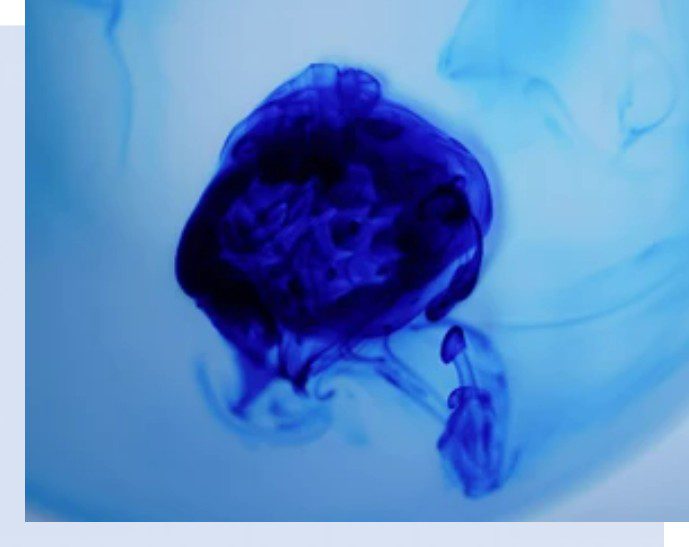
Methylene blue (MB) is a heterocyclic aromatic compound that appears as a dark green powder or crystal, which yields a deep blue solution in water. Originally synthesized in the late 19th century, it has since become an essential tool in laboratories and clinics. Its unique chemical structure and dyeing properties allow it to selectively stain certain biological components, making it an indispensable reagent for cell biology, microbiology, and histopathology.
Beyond staining, methylene blue has therapeutic and diagnostic applications, making it a compound of great interdisciplinary importance. Moreover, it can act as a fluorescent tracer and can be used for real-time and dynamic imaging, such as visualizing blood vessels, lymphatic vessels, nerves, or the boundaries of tumors.
MB is widely used in biological staining. Its cationic nature makes it highly affine for negatively charged biomolecules, primarily nucleic acids (DNA and RNA) and acidic components within the cytoplasm and nucleus.
Microscopy and Histology: In microscopy, MB is routinely used to enhance the visibility of otherwise transparent cells and tissues. It effectively stains cell nuclei, allowing for clear visualization of nuclear morphology. In histology, it serves as a valuable counterstain, often used with acidic dyes like Eosin Y to differentiate various tissue components.
Bacteriology: MB is a classic stain in bacteriology for the identification and morphological study of microorganisms. Bacteria, being largely colorless, become readily observable under the microscope after staining with MB, allowing researchers to discern their shapes (cocci, bacilli, spirilla) and arrangements. It is also used in Gram staining, although not as the primary stain, to differentiate Gram-positive and Gram-negative bacteria.
Viability Assays: A particularly clever application of MB is in determining cell viability, especially for yeast. Live cells possess active metabolic pathways that can reduce MB to its colorless leucomethylene blue form. Conversely, dead cells lack this enzymatic activity and remain stained blue, providing a quick and simple method to assess the proportion of viable cells in a sample.
While its role as a stain is paramount, the unique chemical properties of MB have led to its exploration and adoption in diverse medical and diagnostic fields. Its ability to shuttle electrons and interact with various biological targets makes it a surprisingly versatile compound.
Treatment of Methemoglobinemia: One of the most critical medical uses of MB is in the treatment of methemoglobinemia. This condition arises when the iron in hemoglobin is oxidized from its normal ferrous (Fe2+) state to a ferric (Fe3+) state, rendering it unable to bind oxygen. MB acts as a cofactor for an enzyme called NADPH-dependent methemoglobin reductase, facilitating the reduction of ferric iron back to ferrous iron, thereby restoring hemoglobin’s oxygen-carrying capacity.
Antidote for Cyanide Poisoning: MB can also serve as an antidote for cyanide poisoning. Cyanide disrupts cellular respiration by inhibiting cytochrome c oxidase in the mitochondria. MB can bypass this blockage by acting as an alternative electron acceptor, allowing cellular respiration to continue.
Neuroprotective and Cognitive Enhancement: Emerging research highlights MB’s potential in neurological disorders. It has been shown to improve mitochondrial function, reduce oxidative stress, and inhibit the aggregation of tau proteins and amyloid-beta plaques, which are hallmarks of neurodegenerative diseases like Alzheimer’s. Its ability to cross the blood-brain barrier is crucial for these neurological applications.
Photodynamic Therapy: Due to its photosensitive nature, MB is being investigated as a photosensitizer in photodynamic therapy (PDT) for various cancers and infections. When exposed to specific wavelengths of light, MB generates reactive oxygen species, which can induce cell death in targeted tissues.
Malaria Treatment: Historically, MB was one of the first synthetic drugs used to treat malaria, even before the advent of chloroquine. Interest in its antimalarial properties has seen a revival, particularly in the context of drug-resistant strains, due to its ability to disrupt parasite growth and viability.
When coupled with a specialized near-infrared (NIR) system, MB enables the visualization of structures previously hidden during surgery. Its utility as an NIR-guided surgical technique is currently being explored across several critical medical domains.
Visualization of Ureters: Iatrogenic ureter injury, though rare, is a serious complication, particularly in lower abdominal and gynecological surgeries. Intraoperative identification of the ureters is crucial for avoiding damage and identifying anatomical structures. While light ureter catheters are used, they are invasive and carry additional risks. It is reported that intravenous MB was used for NIR fluorescence-guided ureter visualization, successfully detecting both ureters in 12 patients 10 minutes post-injection, with signals lasting up to 60 minutes. Notably, some ureters that were not visible under white light were identified using NIR-MB.
Visualization of Thyroid and Parathyroid Glands: Localizing and dissecting parathyroid glands during surgery presents a significant challenge due to their variability in number and location, with misdiagnosis leading to severe complications. Early reports in 1971 noted that high intravenous doses of MB (5 mg/kg) could stain parathyroid adenomas blue, distinguishing them from normal tissue. However, such high doses carry an increased risk of side effects, limiting their current clinical trial use. The advent of NIR fluorescence imaging techniques allows for parathyroid gland detection with lower MB doses.
Imaging for Breast Cancer: Intraoperative localization of breast cancer tumors and achieving clear surgical margins remain significant challenges, with a high rate of re-operations. MB’s fluorescent properties offer a promising solution for breast cancer margin detection during breast-conserving treatment and sentinel node biopsy. Studies have shown MB to detect breast tumors in most cases using NIR fluorescence imaging. A 1 mg/kg dose of MB administered either 5 minutes before surgery (early imaging) or 3 hours prior (delayed imaging) showed no statistical difference in tumor-to-background ratio.
MB stands as a testament to the enduring utility of simple yet powerful molecules in science and medicine. From its foundational role in visualizing the microscopic world as a stain and dye, to its critical interventions in treating life-threatening conditions, and its burgeoning applications as a fluorescent tracer for real-time surgical guidance, MB continues to demonstrate its remarkable adaptability. As research progresses, it is highly probable that new and innovative applications for this versatile compound will continue to emerge, further solidifying its place as a cornerstone in biological and clinical sciences.
Methylene blue