


While drug pipelines in immunology, oncology, and rare diseases lean ever more heavily on complement-directed strategies, the people building those pipelines are scrambling for sharper ways to measure how the cascade turns on—or off. Creative Biolabs, already a veteran in complement services, has broadened its menu of tests to become a one-stop shop for complement biology programs.
Many next-gen monoclonal antibodies carry Fc tweaks designed to dial complement activity up or down. To know if a tweak works, developers need hard numbers on how tightly their molecule grabs C1q, the first domino in the classical pathway. Creative Biolabs’ C1q-binding platform does exactly that: a semi-quantitative ELISA that lays out the antibody–C1q handshake in black and white.
The assay matters because C1q engagement sets the stage for complement-dependent cytotoxicity (CDC)—a killing mechanism baked into a growing list of approved and investigational antibodies. Each run includes controls for secondary antibody binding, full dose-response curves, and an EC50 calculation, allowing teams to rank their variants head-to-head.
In a recent exercise, the platform cleanly separated the binding fingerprints of three engineered antibody constructs; all looked “normal” on a simple ELISA curve, yet the refined assay revealed subtle, reproducible differences that could guide lead selection.
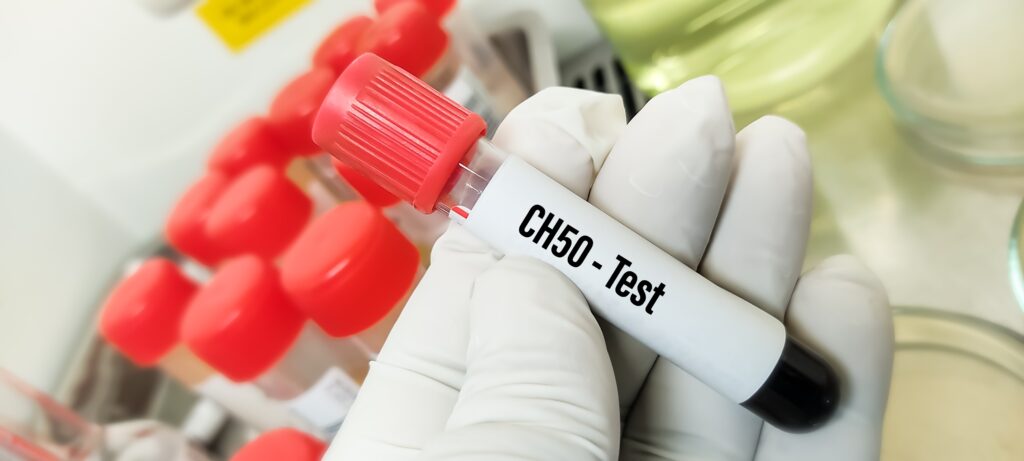
The complement therapeutics market is expanding as the clinical development of therapeutic complement inhibitors, including C1 esterase inhibitors, anti‑C5 antibodies, and CD55/CD59‑modifying agents, progresses. As part of this, hemolytic inhibition assays (HIA) have become critical to measuring the inhibitory potency of candidate molecules. Creative Biolabs’ HIA service quantifies the ability of candidate molecules to inhibit complement‑mediated lysis of sheep red blood cells coated with antibody, providing CH50/AH50 values and inhibition curves for a comprehensive assessment of activity.
The company points out that hemolytic inhibition assays are not only critical for the development of inhibitors, but they are also used to diagnose complement deficiency disorders and to confirm the functionality of specific complement proteins using depleted sera.
Complement assays are heavily dependent on the specificity and quality of the sera and plasma used. Creative Biolabs has a comprehensive catalog of complement‑active biologicals, collected from mice, rats, rabbits, guinea pigs, bovines, and nonhuman primates, that are tailored to a range of specific immunological applications.
Human complement serum is often used to model autoimmune diseases and vaccine formulations, while rabbit and guinea pig sera, which have particularly potent hemolytic activity, are commonly used in classical pathway assays. Complement‑depleted sera are also available for pathway analysis, and the company can also provide custom declarations for specific research applications.
To ensure reproducibility, all sera and plasma products are rigorously QCed, provided with certificates of analysis, and sold in sterile, ready-to-use formats.
Now that Creative Biolabs has expanded its complement testing capabilities, the company is poised to serve as a one-stop shop for biopharma teams working through the intricacies of complement biology—for antibody engineering, inhibitor discovery, and immunology research. With its integrated assays and biologics, Creative Biolabs is poised to help biopharma teams improve their workflows and speed therapeutic discovery.
One Stop Shop for Complement Discovery