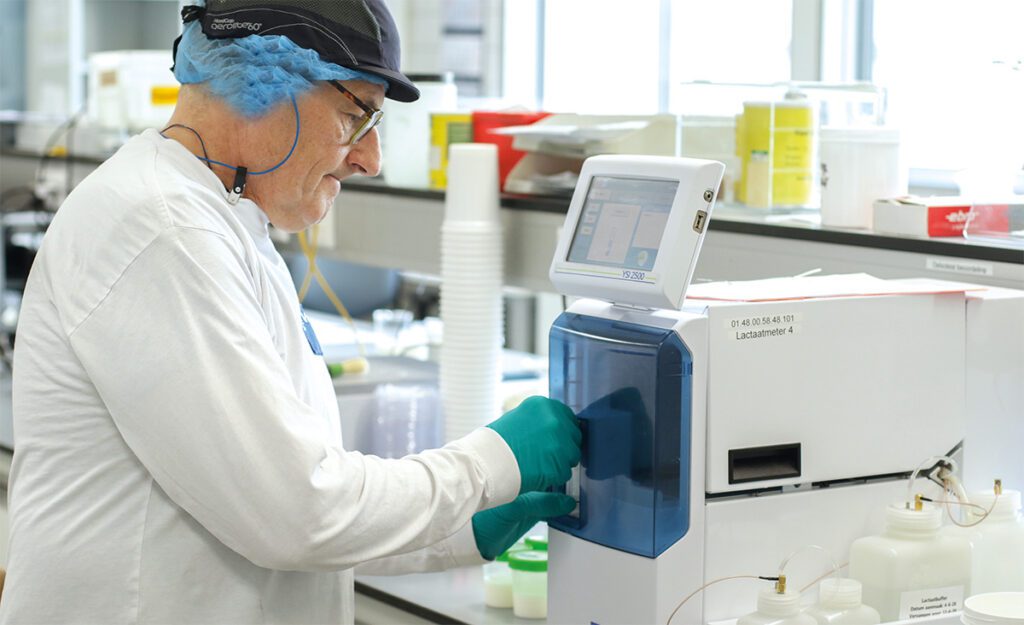
A lactate measurement in Vreugdenhil's QC lab on the YSI 2500 glucose/lactate analyzer, carried out by chemical analyst Ruud Brekelmans | Photo: Vreugdenhil
For Vreugdenhil Dairy Foods in Gorinchem, the automated lactate meter has become indispensable in the laboratory. Every hour, the analyzer provides essential information on the lactate content of the milk powder. The values are available within 60 seconds. This allows the operators to monitor quality optimally and to shut down production as late as possible.
In Vreugdenhil’s production lab, the quality of the milk powder is checked 24/7 for physical and chemical parameters. One of these is the concentration of lactic acid (lactate), an important measure of the quality and solubility of the powder. Thanks to the automated lactate meter, the lab technicians have this data to hand every hour, and the production lines can keep running for as long as possible without any loss of quality.
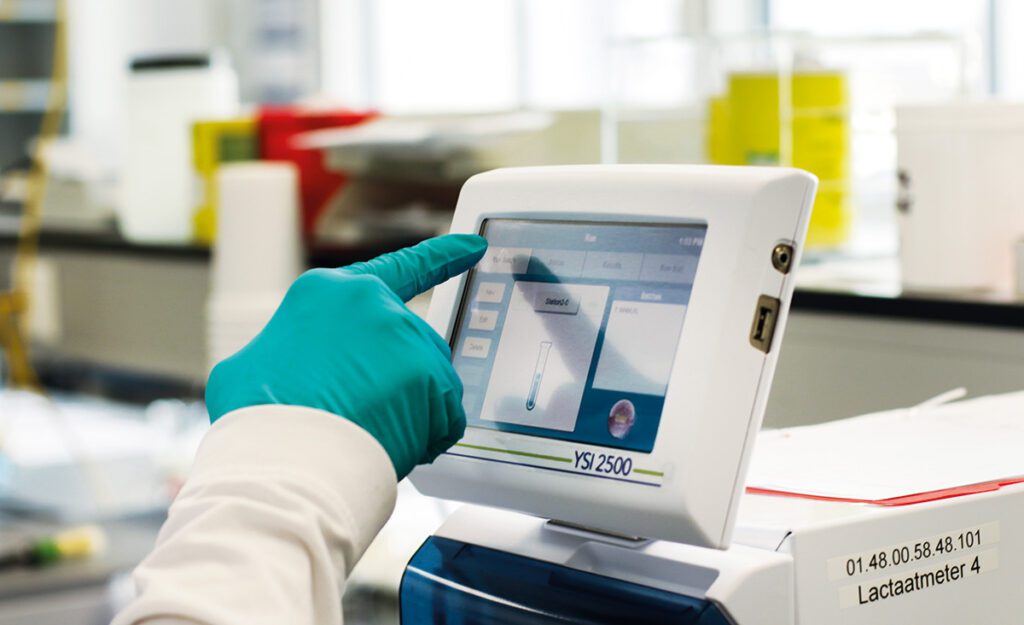
The graphic colour display of the YSI 2500 glucose/lactate analyzer is readable even from extreme angles | Photo:Vreugdenhil
tk1 24/7 Quality Control
A hundred lorries a day, each carrying 25,000 litres of milk in the tank. Four drying towers and ten production lines. Vreugdenhil in Gorinchem converts an enormous quantity of milk into milk powder every day. The well-oiled QC laboratory continuously safeguards quality. Here, eight to twelve solids analyses are carried out every hour. Based on that data, the operators can adjust or shut down production precisely and instantly. Speed is key here.
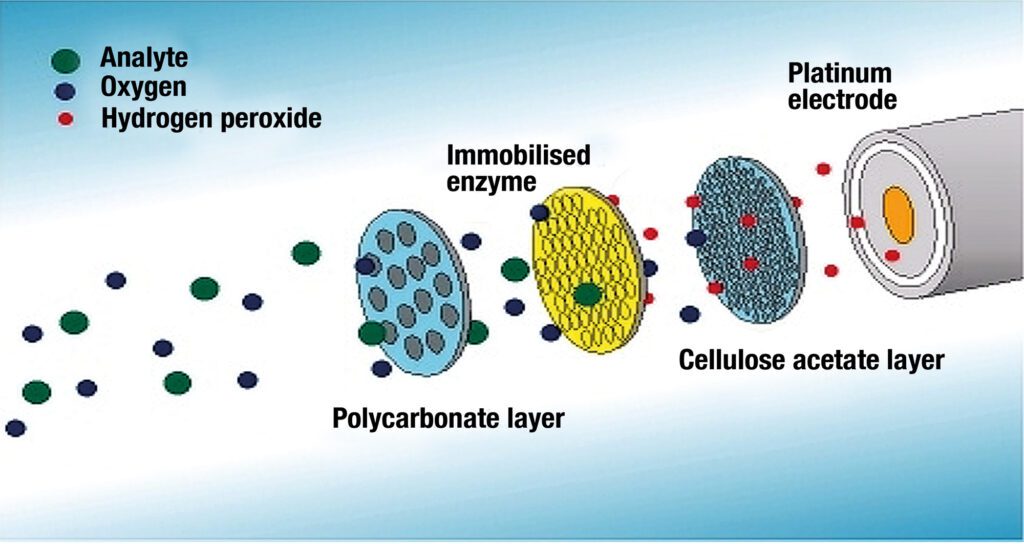
With the graphic above:
The YSI 2500 uses enzyme sensor technology, in which a specific enzyme is immobilised in a patented membrane structure.
After injection, a substrate such as glucose and/or lactate enters the sample chamber, where it is stirred and diluted. The substrate then diffuses through a thin polycarbonate membrane.
After the polycarbonate membrane, the substrate comes into contact with an extremely thin layer of the relevant oxidase enzyme, producing H2O2. The hydrogen peroxide is electrochemically oxidised at a platinum electrode. This generates a signal current that is proportional to the substrate concentration.
The following reaction takes place: Substrate + O2 ——oxidase –>> H2O2 + By-product.
tk2 Lactic acid content as a quality parameter
Lactate measurement is one of the most important analyses for milk powder quality. Lactic acid (lactate) is a natural by-product of lactose fermentation and an significant indicator of undesirable microbial activity in milk. The lactic acid concentration can directly affect the taste, texture, and shelf life of milk. In milk powder, it mainly influences solubility.
Anne Koolhout-van der Donk, QC laboratory team leader, explains: “At least fifteen years ago, research by the R&D department indicated that there is a causal relationship between the lactic acid concentration in milk powder and its solubility. When the lactic acid concentration in the milk rises, the pH falls, and with it the solubility of the milk proteins. This ultimately causes the milk to curdle or form lumps when you dissolve it.”
“The lactate meter has become indispensable in the laboratory”
Anne Koolhout-van der Donk, Vreugdenhil Dairy Foods
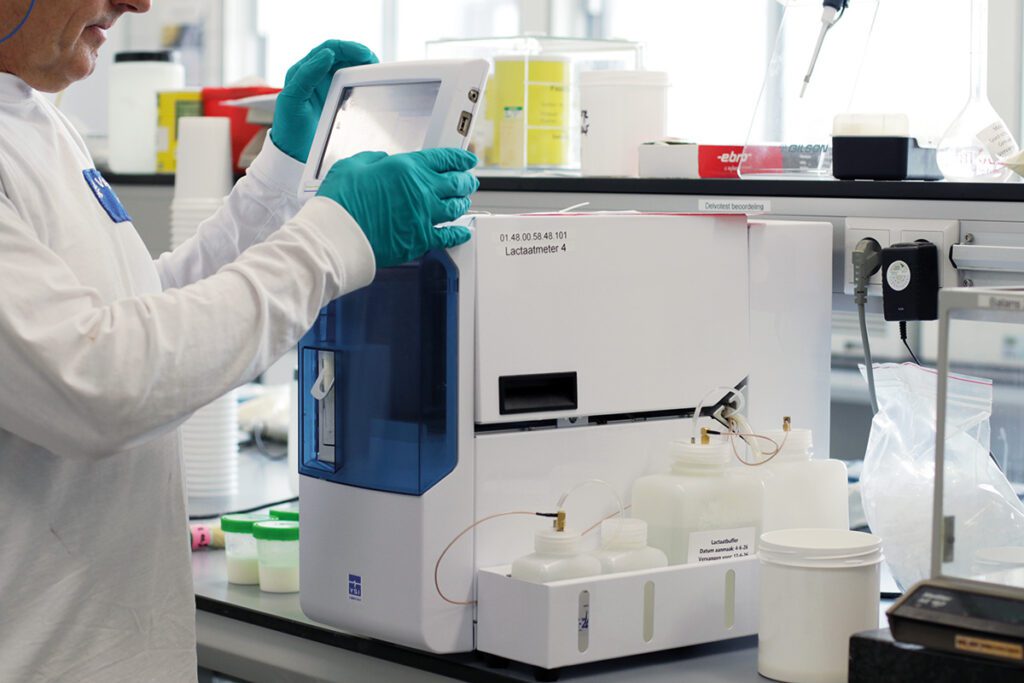
The YSI 2500 Glucose/Lactate analyzer
tk3 New, automated lactate meter
Koolhout was not responsible for purchasing the automated lactate meter herself, but she knows it was bought fairly soon after the outcome of this research. The instrument has been part of Vreugdenhil’s daily QC checks for years and, according to Koolhout, has become ‘indispensable in the lab’. To keep results reliable and reproducible, the lactate meter was recently replaced with the latest model from Salm en Kipp: the YSI 2500 Glucose/Lactate analyzer. “With this automated lactate meter, you measure the lactate content of your sample within 60 seconds. That is essential for milk powder production. Knowing about deviating values quickly means the process can be adjusted in time.”
This is crucial because it considerably reduces the risk of rejected batches. So everything depends on detecting deviations in time, she says: “Thanks to this fast analysis, the lab technicians report the most accurate lactic acid values back to the operators every hour. They in turn can act immediately and shut down the process lines if necessary.”
tk4 Fast and reliable lactate analyses
With the fast lactate measurements, the milk powder plant guarantees consistent, high-quality output and keeps food waste to a minimum. “Our customers are setting ever stricter requirements, and our product is tested on at least 15 points. Because we can now also steer production on lactate, our powder quality has improved further,” says Koolhout.
“Because we can now also steer production on lactate, our powder quality has improved further”
Anne Koolhout-van der Donk, Vreugdenhil Dairy Foods
tk5 Finally, Koolhout shares her four best tips for using the automated YSI 2500 Glucose/Lactate analyzer well in other laboratories:
- Make sure the sample chamber and injection needle are absolutely clean; residues from a previous sample can interfere with the measurement.
- Lactate measurement is sensitive to extreme temperatures: let warm milk samples cool to the meter’s operating temperature first.
- Calibrate the analyzer regularly with the control fluids supplied.
- Replace your lactic acid-based control sample regularly.
Advantages of the YSI 2500 Glucose/Lactate analyzer
Advantages of this instrument, supplied by Salm en Kipp:
- Can measure glucose and lactate simultaneously
- Fast, reliable and accurate measurement in 60 seconds
- Small sample size, little to no preparation needed
- High resolution and accurate measurement thanks to analyte-specific membranes on the measuring electrodes
- Information and measurement results clearly visible on the display
- Graphic colour display readable even from extreme angles
- User-friendly touchscreen
- Single and continuous measurement modes available
- Automation included for up to 96 positions (multi-well plates)
- Flexible options for data processing, data storage, export, and communication thanks to various interfaces to a PC or server
- Instructions via the analyzer’s display, including training videos
Would you like to contribute to the food safety of dairy products used worldwide? Vreugdenhil Dairy Foods regularly offers internships for students who want to gain experience in an international and innovative dairy environment.