


The path from early-stage drug discovery to a successful Investigational New Drug (IND) application is fraught with high attrition rates. For targeted therapies and immuno-oncology, one persistent challenge in drug development is the limited translatability of conventional preclinical models to human biology. To mitigate these translational risks, drug developers are increasingly combining complementary in vitro and in vivo approaches to rigorously evaluate safety, model complex immune interactions, and validate therapeutic efficacy before advancing candidates toward IND-enabling studies.
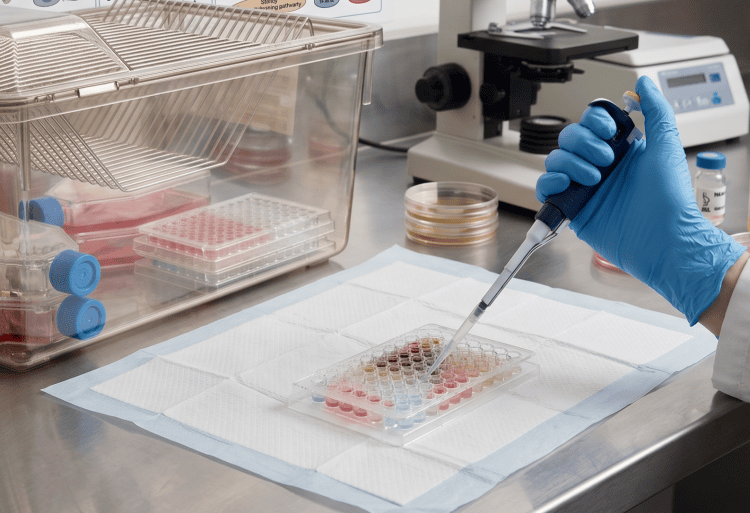
The foundation of a reliable preclinical pipeline begins at the cellular level. Before advancing to complex animal models, drug candidates must undergo early in vitro safety profiling. Identifying adverse cellular responses early—such as cardiotoxicity, hepatotoxicity, and off-target effects—prevents costly late-stage failures. By utilizing advanced in vitro toxicity tests, researchers can rapidly screen compound libraries. Modern assays, ranging from high-throughput cellular viability screens to complex 3D organoid models, provide critical baseline data necessary to optimize lead compounds with confidence.
While in vitro assays are essential for initial safety assessment, they cannot fully replicate the intricate systemic immune responses required for evaluating modern immunotherapies like CAR-T cells, bispecific antibodies, or immune checkpoint inhibitors. Standard murine models often fall short due to fundamental interspecies immunological differences.
To bridge this translational gap, researchers are increasingly relying on humanized mouse models, such as those provided by Creative Biolabs. By engrafting immunodeficient mice with human hematopoietic stem cells (HSCs) or peripheral blood mononuclear cells (PBMCs), these models enable partial reconstitution of key components of the human immune system. Furthermore, sophisticated immune checkpoint knock-in models (such as dual or triple-target models like hPD-1/hPD-L1/hCTLA-4) allow researchers to investigate the nuanced interactions among human-specific therapeutic targets, the tumor microenvironment (TME), and immune responses in a living organism.
With early safety established and humanized systems in place, the final critical step is evaluating in vivo efficacy. The complexity of modern oncology demands highly specialized tumor modeling and pharmacodynamics evaluations. Whether utilizing syngeneic models, cell-derived xenografts (CDX), or patient-derived xenografts (PDX), tailoring the specific tumor model to the drug’s mechanism of action is vital. Combining appropriate tumor models with humanized immune systems offers a more physiologically relevant preclinical setting, enabling precise evaluation of tumor regression, immune cell infiltration, and biomarker responses.
A fragmented approach to preclinical research—siloing toxicity screening, model generation, and efficacy testing across multiple disparate vendors—often leads to data inconsistencies and delayed timelines. A centralized, integrated approach ensures that data generated in early assays seamlessly informs the design of complex in vivo studies, ultimately building a robust, IND-enabling data package.
Creative Biolabs offers an integrated suite of preclinical services designed to support oncology research. Spanning high-throughput toxicity screening, customized humanized mouse models, and precise pharmacodynamic evaluations, our capabilities help researchers navigate translational challenges and optimize candidate selection.
Learn more about Creative Biolabs' humanized mouse models