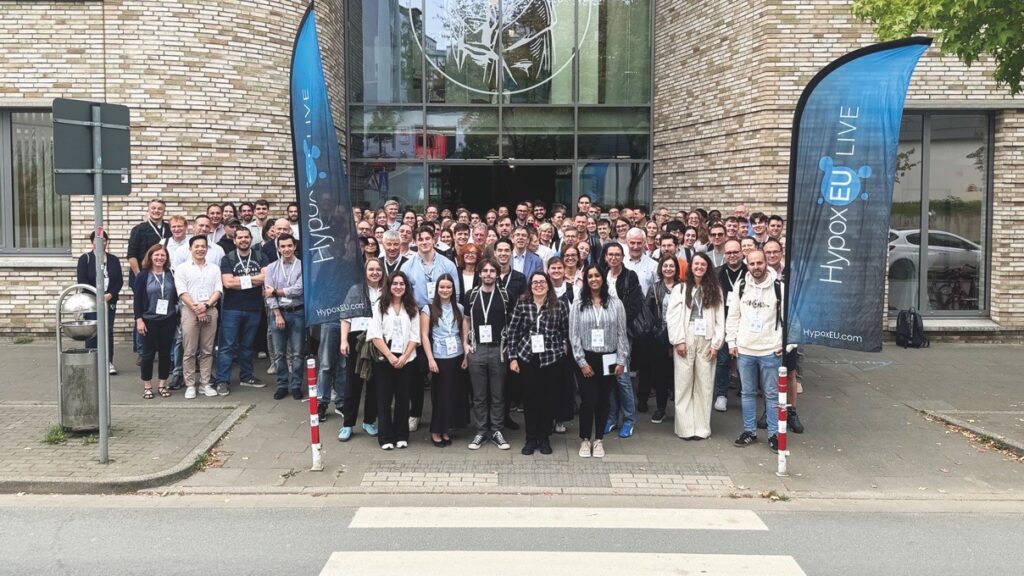
Participants of HypoxEU during the third in-person edition in Essen, from 27 to 30 September | Photo: The Baker Company
With the fourth edition of HypoxEU coming up in 2028 in Bilbao, Spain, this international scientific community around oxygen research is growing. The HypoxEU initiative focuses on all kinds of life sciences research related to oxygen variations, and its main goal is to bring different disciplines together to share knowledge across research domains. In addition, young researchers are attracted with a minimal registration fee.
Traditionally in the life sciences, it is very common to organise webinars and conferences on specific scientific topics, such as organoids or plant biology. But this only attracts researchers working exclusively in these fields, and not people from other disciplines. The same applied to hypoxia – the medical term for a lack of oxygen in the body’s tissues, which prevents cells from functioning optimally. However, the field is becoming increasingly mainstream and now touches on almost every area of the life sciences. That is precisely the idea behind HypoxEU. “We want to change this with HypoxEU”, says Dr Krista Rantanen, Director of Global Business Development, Advanced Life Science Markets at The Baker Company. Dr Rantanen is also head organiser of HypoxEU Connect and co-founder of HypoxEU.
“In a short time, HypoxEU has grown into the leading international network for research on the impact of oxygen variations on biological processes. By attending several congresses and virtual events, researchers and industrial stakeholders can share knowledge about their research field related to oxygen variations. We connect all kinds of disciplines, such as stem cell biology, immunology and evolutionary biology.”
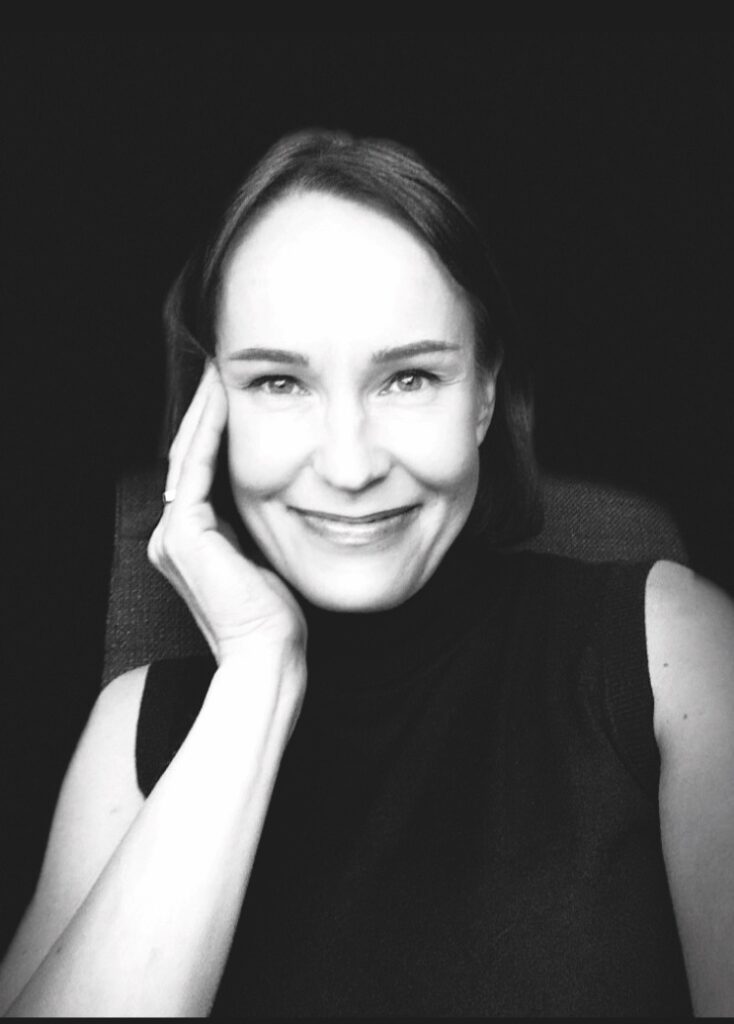
Dr Krista Rantanen, Director of Global Business Development, Advanced Life Science Markets at The Baker Company | Photo:The Baker Company
tk1 HypoxEU: connecting researchers
A low oxygen level lies at the basis of many biological processes, for example a myocardial infarction, sleep apnoea or tumour hypoxia. Following the success of the first live event in Dublin in September 2022, the conference in Dresden in 2024, and Essen in September 2026, the fourth in-person HypoxEU event is scheduled for 2028 in Bilbao, Spain. And, through initiatives in Europe, the US, China, Japan and Southeast Asia, HypoxGlobal connects researchers worldwide to accelerate progress in this field.
What was once often viewed primarily as a specialist hypoxia field now reaches into almost every area of life science. According to Dr Rantanen, this shift matters because it changes who needs to be part of the conversation.
“We connect all kinds of disciplines, such as stem cell biology, immunology and evolutionary biology”
Krista Rantanen, The Baker Company
tk2 Young scientists in the picture
HypoxEU began during the COVID-19 pandemic, when researchers struggled to make their work visible. “We started with a series of webinars so that researchers could continue sharing their results,” says Dr Rantanen. “Actually, the origin lies way back in the UK, where a local community of oxygen biology researchers in Oxford and Cambridge had a society called HypoxyBridge, and another one, HypoxiaNET, was an EU COST Action initiative. They had both ended, so we picked up where they left off and formed HypoxEU, so that this important topic would not be forgotten. To tackle the problem that young scientists often find it difficult to attend meetings because of the high costs of conferences, food and accommodation, The Baker Company sponsors the conferences exclusively for young scientists. By lowering the registration fee, young people can attend easily and join the discussions.”
tk3 Nobel Prize for oxygen research in 2019
In 2019, the research field of hypoxia received a boost. That year the Nobel Prize in Physiology or Medicine was awarded to William Kaelin Jr., Sir Peter Ratcliffe and Gregg Semenza for their discoveries of how cells sense and adapt to oxygen availability. The need for oxygen to sustain life has been understood since the onset of modern biology, but the molecular mechanisms underlying how cells adapt to variations in oxygen supply were unknown until the prize-winning work.
The so-called factor HIF (hypoxia-inducible factor) plays a central role. This protein regulates gene expression in response to changes in oxygen in the animal cell, allowing immediate cellular responses to oxygenation. With the discovery of this protein, they also paved the way for promising new strategies to fight anaemia, cancer and many other diseases.
tk4 Facilitation
“Baker’s role in HypoxEU is one of facilitation,” Dr Rantanen continues. “The science belongs to the researchers, and the value comes from the quality of the scientific discussion and the people who contribute to it. Baker helps create the framework that allows that discussion to happen, through organisation, continuity, communication, and support for the community between and during meetings. Dublin established the format in 2022. Dresden strengthened the network. Essen showed how much the community had grown. Bilbao in 2028 will be the next opportunity to bring that community together again and continue building on those connections.”
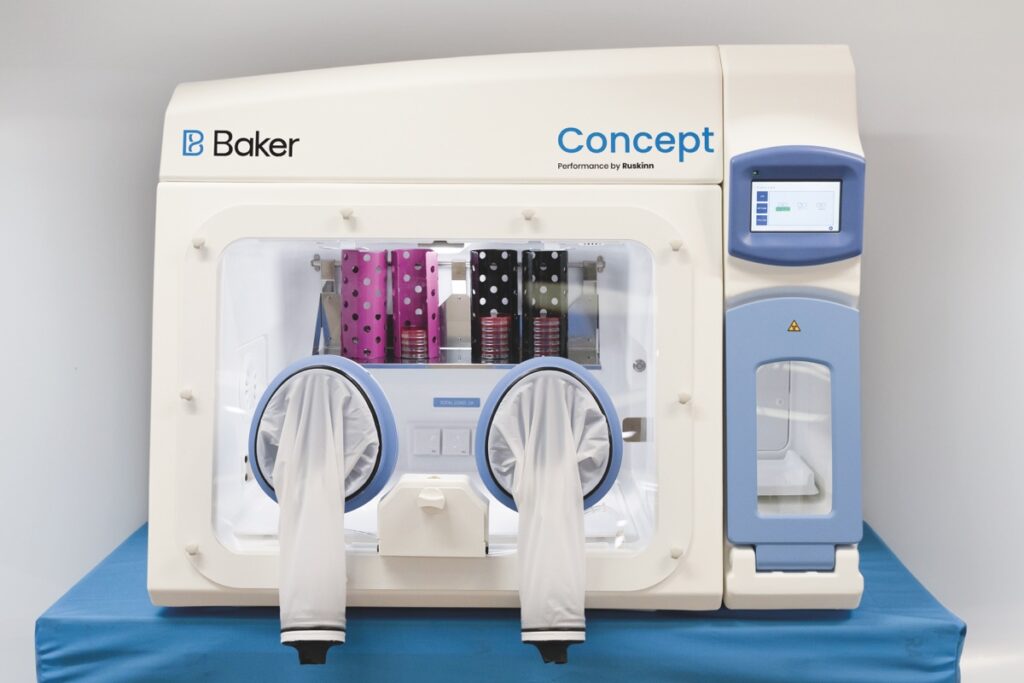
The gloveboxes and workstations of Ruskinn Technologies, now part of The Baker Company, offer fully controllable conditions for hypoxia research | Photo:The Baker Company
tk5 Oxygen workstations from The Baker Company
However, doing research at lower oxygen levels is not that easy and requires specialised equipment, Dr Rantanen explains. It is not just a matter of creating a vacuum, as some oxygen always needs to be present.
With the acquisition of Ruskinn Technologies, a specialist in gloveboxes and workstations, The Baker Company has expanded its portfolio for biological and medical research to include laboratory equipment designed specifically for culturing and studying cells and microorganisms under highly precise, controlled conditions. Products concentrate on hypoxia cell culture environments, including:
- Anaerobic workstations (oxygen-free environments for microbiology), and hypoxia and physiological oxygen systems that mimic the low oxygen levels found in human tissue
- Cell culture and stem cell research
- Equipment for cancer research, molecular biology and regenerative medicine
Want to know more about workstations for hypoxia research?
View the profile of The Baker Company