



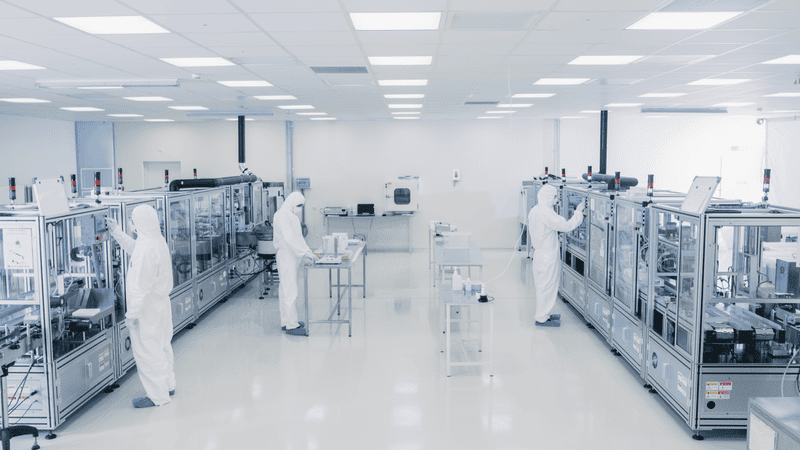
Cleanrooms are among the most energy-intensive environments in modern facilities. Meeting strict requirements for temperature, humidity, pressure, and cleanliness levels demands significant airflow and continuous HVAC operation. However, operating a cleanroom at maximum-load conditions at all times can consume considerably more energy than necessary.
The challenge is therefore clear: how can operators improve energy efficiency without putting product quality, process reliability, or regulatory compliance at risk?
Many cleanroom HVAC systems are designed around fixed setpoints and worst-case operating conditions. Although this approach provides an important safety margin, it can cause ventilation systems to operate at unnecessarily high rates, even when the cleanroom is unoccupied or operating below its maximum load.
In practice, cleanroom conditions are not static. Occupancy, equipment use, production activity, and contamination loads can change throughout the day. HVAC strategies that do not respond to these variations may use more energy than required.
A more sustainable approach begins with understanding how the cleanroom performs under actual operating conditions.
Accurate, real-time measurements give HVAC systems the information required to respond to changing conditions. Three particularly influential parameters are temperature, relative humidity, and differential pressure.
When these measurements are combined with information about occupancy and ongoing activities, operators can identify opportunities to adjust airflow while maintaining the required environmental conditions.
Accurate measurement does more than document conditions. It provides the foundation for informed control decisions. However, installing sensors alone is not enough: reliable data depends on selecting appropriate instruments, positioning them correctly, and maintaining their accuracy over time. Measurement should therefore be integrated into cleanroom and HVAC planning from the outset.
The greatest potential emerges when accurate measurement is combined with smart HVAC design and demand-controlled ventilation.
Designing systems around actual loads and operating states can help avoid unnecessary overcapacity. Demand-controlled ventilation allows airflow to respond to actual conditions, while reliable measurements confirm that temperature, humidity, pressure, and cleanliness remain within the required limits.
Together, these elements can support lower energy consumption, stable environmental control, and continued compliance.
Discover how cleanroom design, demand-controlled ventilation, and accurate measurements can work together to improve energy efficiency without compromising performance or compliance. Join experts from Vaisala, Granlund and Halton for the webinar “Sustainable cleanroom performance: Integrating HVAC design, on-demand environmental control and monitoring” on November 4, 2026. Register even if you cannot attend live, and you will receive the recording.
Register for the webinar